
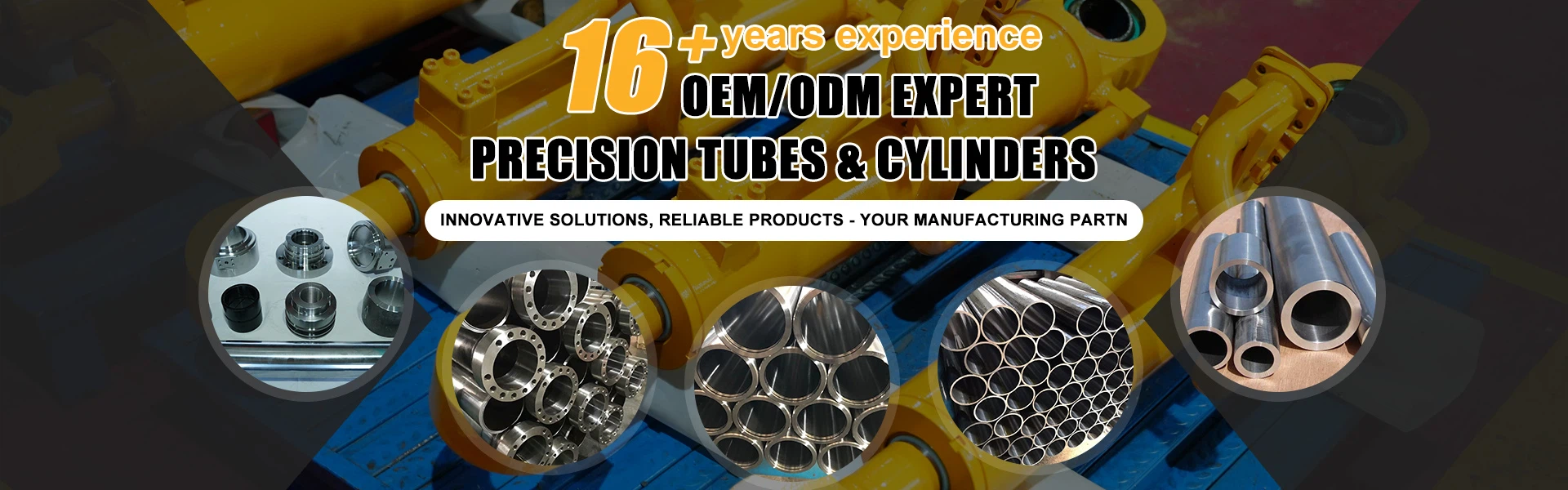
Cold-drawn tube is a precision tube manufactured using a cold plastic deformation process. Its core principle is to utilize the ductility of metal at room temperature to achieve cross-sectional reduction and improved dimensional accuracy through forced extrusion through a die. This process not only imparts higher mechanical strength and surface finish to the tube, but also meets the stringent high-performance requirements of aerospace, automotive, and precision instrumentation.
I. Basic Principles and Core Advantages of Cold-drawn Tube Forming
The essence of cold-drawn tube forming is to force a metal billet through a die smaller than its diameter using external force, resulting in uniform plastic deformation during the drawing process. Unlike hot processes such as hot rolling or hot extrusion, the cold drawing process occurs at room temperature, avoiding the coarsening of metal grains caused by high temperatures, thereby preserving the material's original high strength. Furthermore, the precise guidance of the die allows the tube wall thickness deviation to be controlled within ±0.05mm and the straightness error to be less than 0.1mm/m-a level of precision unattainable with traditional processes. From a microscopic perspective, cold drawing causes work hardening in metals. Dislocations multiply and entangle with each other, significantly increasing the material's hardness and tensile strength (typically 20%-30% higher than the original material), but with a corresponding decrease in plasticity and toughness. This characteristic makes cold-drawn tubes particularly suitable for applications subject to high pressure or high wear, such as hydraulic cylinders and high-pressure gas cylinders.
II. Analysis of Key Process Steps
1. Pretreatment of the Tube: Laying the Foundation for Deformation
The tubes undergo rigorous screening before cold drawing. Seamless or welded steel pipes are typically used as the base material, and their surface must be free of defects such as cracks and folds. Pretreatment steps include:
•Stress Relief Annealing (Optional): For high-hardness materials or high-deformation applications, low-temperature annealing at 600-700°C is used to eliminate internal stress and prevent drawing cracking.
•Pickling and Phosphating: Using sulfuric or hydrochloric acid to remove surface oxide scale and phosphating to form a lubricating film reduces friction between the die and the tube.
•Lubricating Coating: Applying lime milk, soap solution, or a specialized polymer lubricant further reduces drawing resistance and protects die life.
2. Die Design and Selection: A "Precise Controller" of Deformation
The die is the core tool in the cold drawing process, and its structure directly affects the dimensional accuracy and surface quality of the tube. Common die types include:
•Conical die: The most widely used type, with an inlet diameter larger than the tube billet, gradually converging to the target dimension, achieving uniform deformation through a gradual angle (typically 8°-16°);
•Cylindrical die: Used for final finishing, ensuring tube diameter tolerances meet IT7-IT9 (international standards);
•Combination die: For special-shaped tubes (such as elliptical and hexagonal tubes), complex cross-sections are achieved through the coordinated deformation of multiple die segments.
Die materials are typically cemented carbide (such as WC-Co) or high-speed steel. Surface roughness must be below Ra0.2μm and polished to reduce the risk of scratches.
3. Drawing Process Control: The Art of Balancing Force and Deformation
Drawing equipment is categorized into three types: chain, hydraulic, and drum. Hydraulic drawing machines are the mainstream choice due to their stable pulling force output. The following parameters should be monitored during operation:
•Elongation: The deformation per single pass is typically controlled at 10%-20%. Excessive deformation can lead to tube wall instability and wrinkling, while too little can result in low efficiency.
•Drawing speed: For ordinary carbon steel, the average is approximately 5-10 m/min, while for difficult-to-deform materials such as stainless steel, the maximum speed should be reduced to 2-5 m/min.
•Temperature management: Although cold drawing is performed, continuous large deformation can still cause localized temperature rise in the tube (over 100°C), requiring intermittent cooling to prevent thermal softening.
III. Typical Process Routes and Adaptation to Special Scenarios
1. Conventional Process: Multiple Iterations from Blank to Finished Product
Typical cold-drawn tube production involves 2-5 progressive deformation passes. For exa mple, when processing a 50mm outer diameter and 5mm wall thickness tube blank to a 30mm outer diameter and 3mm wall thickness, the tube may first be reduced to a 40mm outer diameter (in the first pass) using a large deformation die, and then gradually refined to the target dimensions. After each pass, straightening and trimming are performed, and finally, eddy current testing or ultrasonic testing is performed to ensure internal defects are free of defects.
2. Special Process Variants: Meeting Diverse Needs
•Short Mandrel Drawing: A rigid mandrel is inserted into the tube to limit wall shrinkage, allowing for the production of thin-walled tubes (down to a minimum wall thickness of 0.5mm);
•Long Mandrel Drawing: The mandrel moves with the tube, enabling the one-piece forming of extremely long tubes (over 10m in length);
•Dieless Forming (DFM): An emerging technology that replaces physical dies with hydrostatic pressure, making it suitable for trial production of small batches of high-precision special-shaped tubes.
IV. Challenges and Future Trends
Although the cold drawing process is mature, it still faces challenges such as rapid die wear (a single die set has a lifespan of approximately 5-10 tons) and the difficulty of forming complex cross-sections. Future development directions include:
•Digital simulation: Utilizing finite element analysis (FEA) to optimize die geometry and drawing parameters, reducing trial-and-error costs;
•Combined process integration: Integrating technologies such as laser polishing and ion implantation to further enhance surface properties;
•Green manufacturing: Developing water-based lubricants to replace traditional oil-based lubrication, reducing environmental pollution.
From precision medical catheters to deep-sea drilling equipment, cold-drawn tubing, with its unique advantages of "micron-level precision combined with 10,000-ton strength," continues to drive the advancement of high-end manufacturing. With advances in materials science and manufacturing technology, this traditional process is poised to find new life in the intelligent era.


