
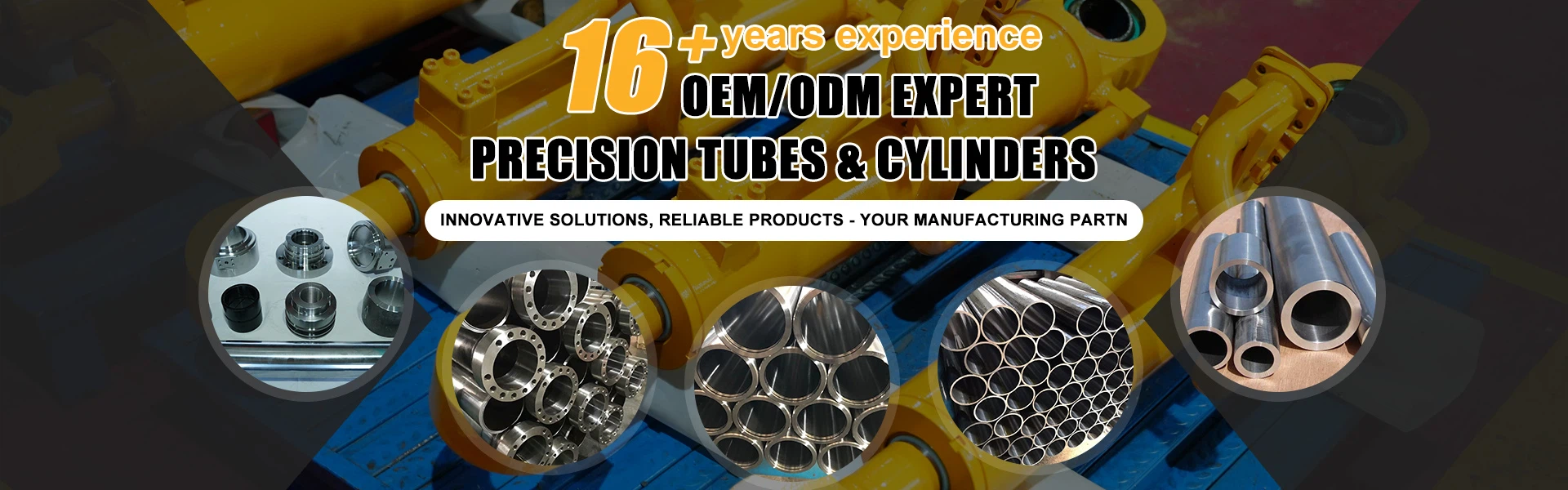
Cold-drawn tube is a precision steel tube manufactured through the cold drawing process. It features high dimensional accuracy, excellent surface finish, and superior mechanical properties. It is widely used in machinery manufacturing, the automotive industry, aerospace, and other fields. Its production method primarily involves key steps such as tube blank preparation, lubrication, cold drawing, and heat treatment.
First, tube blank preparation is a fundamental step in cold-drawn tube production. Tube blanks are typically hot-rolled seamless or welded steel pipes and undergo rigorous quality inspection to ensure their chemical composition and mechanical properties meet specified requirements. The size and surface quality of the tube blanks directly impact the subsequent cold drawing process. Therefore, the tube blanks must be straightened, cut, and cleaned to remove scale and defects to ensure a smooth cold drawing process.
Second, lubrication is a crucial step in the cold drawing process. Because the friction between the metal and the die during the cold drawing process is high, it can easily damage the tube surface or cause die wear. Therefore, a high-efficiency lubricant must be applied to the tube blank surface. Common lubrication methods include phosphating and saponification, graphite coating, or specialized lubricating coatings to reduce friction, improve cold drawing efficiency, and enhance the surface quality of the tube.
Then comes the cold drawing stage. Cold drawing involves pulling the tube blank through a tapered die, reducing its cross-section and increasing its length to achieve precise dimensions and shape. During the cold drawing process, the tube undergoes plastic deformation at room temperature, resulting in grain refinement and significant improvement in mechanical properties. Cold drawing can be performed in a single or multiple passes. Specific process parameters, such as drawing speed, die taper, and lubrication conditions, must be adjusted according to the tube material and specifications.
Finally, cold-drawn tubes typically undergo heat treatment to eliminate work hardening, improve microstructure, and adjust mechanical properties. Common heat treatment methods include annealing and normalizing. By controlling the heating temperature and cooling rate, the tube achieves the desired strength, toughness, and ductility. In summary, the synthesis method of cold-drawn tubes involves multiple links such as tube blank preparation, lubrication treatment, cold drawing and heat treatment. Through precise process control, high-performance precision steel tubes can be manufactured to meet the application needs of different industrial fields.


