
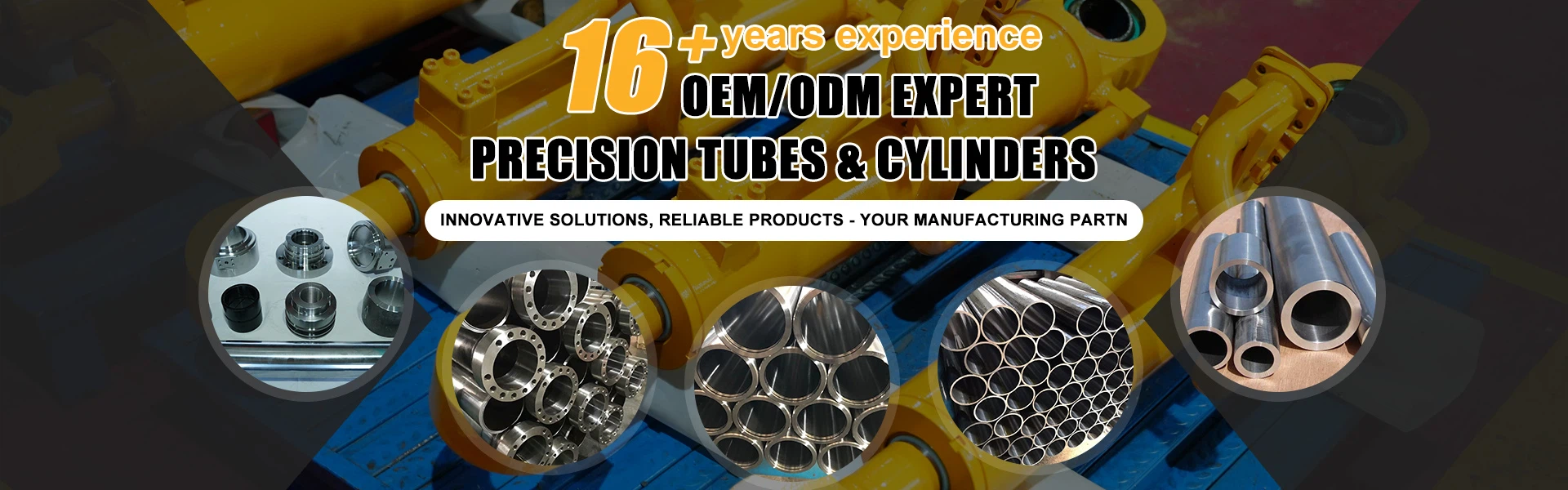
Cold-drawn tubes are high-precision steel tubes processed through a cold-drawing process and are widely used in machinery manufacturing, the automotive industry, the petrochemical industry, and other fields. Their excellent dimensional accuracy and surface quality make them an ideal choice for many demanding applications. The performance of cold-drawn tubes depends largely on their material, which determines the tube's strength, corrosion resistance, wear resistance, and processability.
The main materials used for cold-drawn tubes include carbon structural steel, alloy structural steel, and stainless steel. Carbon structural steel, such as No. 10 and No. 20 steels, is the most common material for cold-drawn tubes. It has good plasticity and weldability and is suitable for applications with low strength requirements, such as mechanical parts and hydraulic piping. This material is low-cost and has good processability, making it widely used in general industrial applications.
Alloy structural steels, such as 40Cr and 20CrMnTi, are another important material for cold-drawn tubes. The addition of alloying elements such as chromium, manganese, and titanium significantly improves the tube's strength, wear resistance, and heat-treatability. This type of material is often used in the manufacture of high-load, high-precision mechanical components such as bearing sleeves and gears, meeting the requirements of high strength and wear resistance.
Stainless steel cold-drawn tubes are renowned for their excellent corrosion resistance. Commonly used are austenitic stainless steels such as 304 and 316. These materials are widely used in the chemical, food processing, and medical device industries, maintaining excellent corrosion resistance and hygienic properties in harsh environments. Additionally, martensitic stainless steels such as 2Cr13 are often used in applications requiring both strength and corrosion resistance.
In summary, the material choice for cold-drawn tubes depends on the specific application requirements. Carbon steel is suitable for general use, alloy steel for high-strength requirements, and stainless steel for corrosive environments. Appropriate material selection can fully leverage the performance advantages of cold-drawn tubes and meet the stringent requirements of various industries.


