
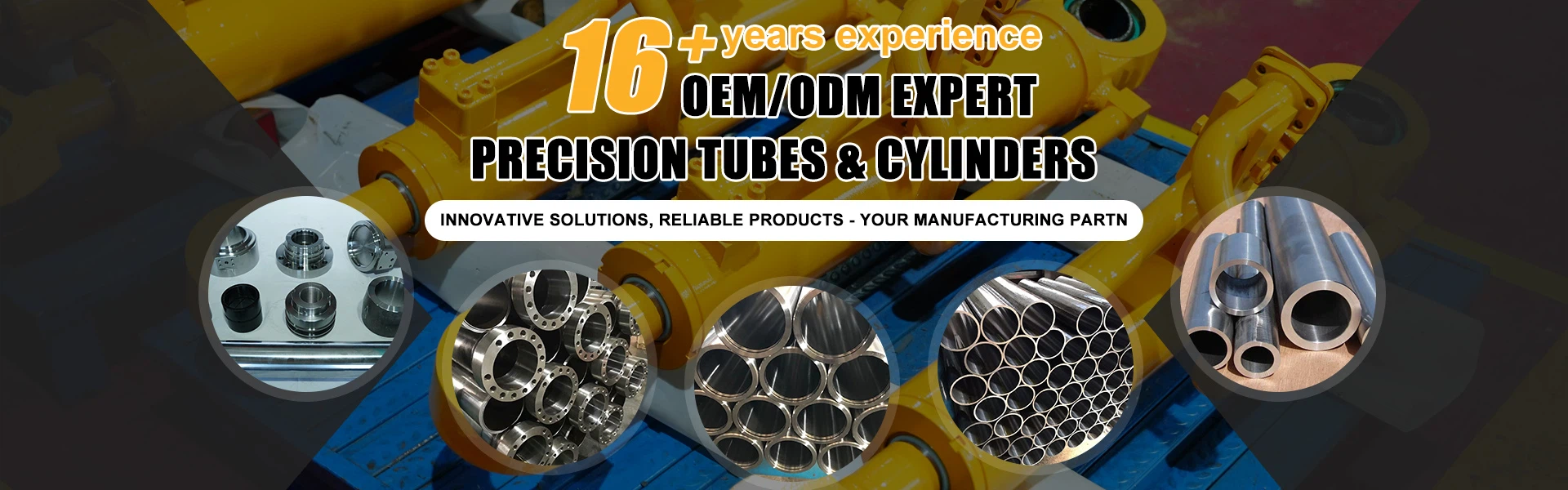
As core components in hydraulic and pneumatic systems, the material selection for piston rods and cylinders directly impacts the equipment's durability, reliability, and operational efficiency. Under the demanding operating conditions of high-pressure, high-frequency reciprocating motion, the cylinder material must possess excellent mechanical properties, wear resistance, corrosion resistance, and good processability. Currently, the main materials used for piston rods and cylinders in the industrial sector include high-quality carbon structural steel, alloy structural steel, stainless steel, and special surface-treated materials, each offering advantages depending on the specific application.
1. High-quality Carbon Structural Steel: Balancing Economy and Basic Performance
High-quality carbon structural steel (such as 20 steel and 35 steel) is the traditional base material for piston rods and cylinders. Due to its low cost and ease of processing, it is widely used in medium and low-pressure applications where strength requirements are not high. Normalizing or tempering heat treatment can enhance the overall mechanical properties of this steel, while chrome plating effectively enhances its wear and corrosion resistance. However, the inherent limitations of carbon steel lie in its relatively low tensile strength and fatigue resistance. It is prone to deformation or corrosion in high-pressure or corrosive environments, and therefore often requires subsequent surface hardening processes to address these shortcomings.
II. Alloy Structural Steel: The Preferred Option for High Strength and Fatigue Resistance
For medium-to-high-pressure and high-load conditions, alloy structural steels (such as 45 steel, 27SiMn, and 40Cr) are a preferred choice due to their inclusion of alloying elements such as chromium, manganese, and silicon. For example, 40Cr, after quenching and tempering heat treatment, can achieve high tensile strength (≥800 MPa) and yield strength, while also exhibiting good impact toughness and dimensional stability. Cylinder blocks made of this material perform exceptionally well in heavy-load applications such as construction machinery and metallurgical equipment. However, precision machining and surface hardening techniques (such as nitriding and carburizing) are required to further enhance surface hardness and wear resistance to mitigate wear caused by high-frequency friction.
III. Stainless Steel: A Solution for Corrosion Resistance and High-Cleanliness Environments
In highly corrosive environments or high-cleanliness requirements, such as chemical processing, food processing, and marine engineering, stainless steel (such as 304 and 316L) is the preferred cylinder material. Austenitic stainless steel not only offers excellent resistance to acid, alkali, and salt spray corrosion, but its non-magnetic properties also make it suitable for precision instruments. The addition of molybdenum to 316L stainless steel further enhances its resistance to pitting and crevice corrosion. However, its high material cost and low thermal conductivity necessitate a trade-off between strength and corrosion resistance in high-temperature and high-pressure environments. Furthermore, stainless steel cylinders are typically mirror-polished or electrolytically polished to meet sanitary or optical-grade application requirements.
IV. Surface Treatment Technology: Secondary Enhancement of Material Properties
In addition to the base material, the actual performance of the piston rod and cylinder body is highly dependent on surface engineering techniques. Common treatment methods include:
•Hard chromium plating: Electroplating creates a uniformly thick chromium layer (typically 30-50 μm), significantly improving surface hardness (HV 800-1200) and wear resistance, but the risk of hydrogen embrittlement should be considered.
•Nitriding: Nitrogen atoms are introduced into the steel surface at approximately 500°C, forming a high-hardness nitride layer (up to HV 900-1100), which offers wear resistance, anti-seizure, and fatigue resistance.
•Spraying ceramic or tungsten carbide: Thermal spraying creates an ultra-hard coating suitable for extreme wear or high-temperature operating conditions, but controlling coating adhesion and uniformity can be challenging.
Conclusion
The selection of piston rod and cylinder material requires comprehensive consideration of multiple factors, including operating pressure, fluid environment, cost budget, and maintenance cycle. In the future, with advances in materials science, the application of high-strength, lightweight alloys (such as titanium alloy composites), nano-coating technology, and additive manufacturing processes will further enhance cylinder performance, providing more reliable solutions for the high-end equipment manufacturing industry.


