
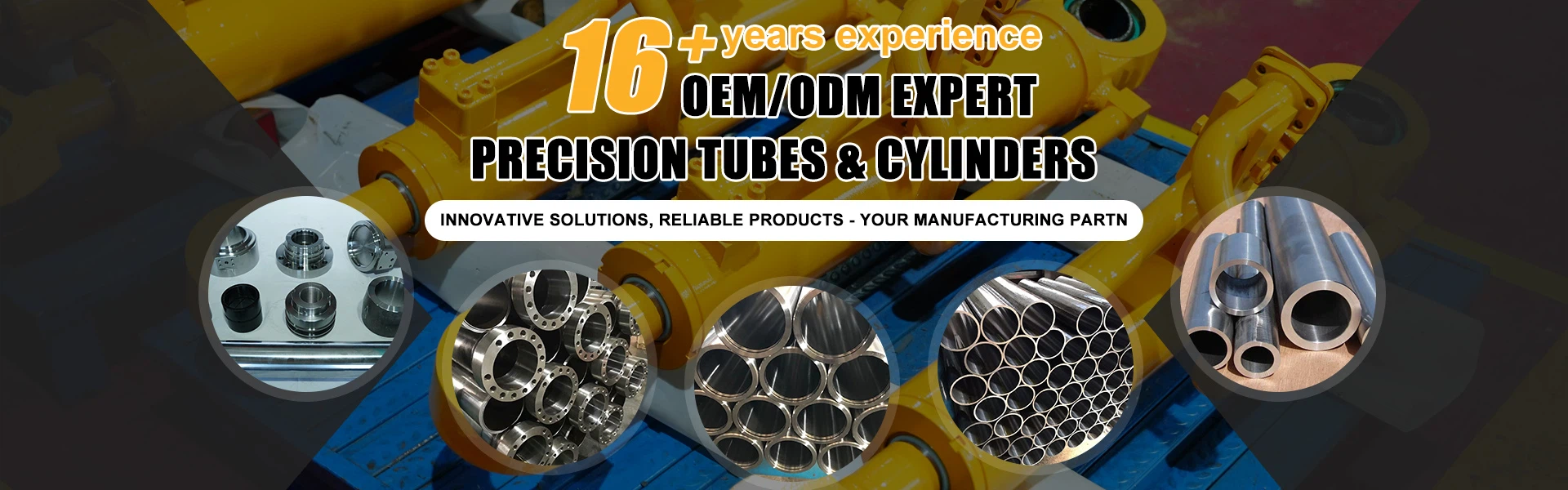


As the core actuator in hydraulic systems, the performance of hydraulic cylinders directly impacts the reliability and efficiency of mechanical equipment. The forming process is a key factor in determining hydraulic cylinder quality, involving the comprehensive application of material selection, structural design, and manufacturing techniques. This article systematically explains the hydraulic cylinder forming process from the perspectives of process principles, key technologies, and development trends.
I. Basic Process Flow of Hydraulic Cylinder Forming
Hydraulic cylinder forming typically includes core steps such as barrel machining, piston rod fabrication, and end cap assembly. The barrel, as the primary component subject to high pressure, is particularly critical in its forming process. Common forming methods include seamless steel pipe cutting, boring, and rolling. Seamless steel pipe is the preferred material due to its high strength and excellent pressure resistance. Precision boring is used to ensure inner bore cylindricity, followed by rolling to enhance surface hardness and wear resistance.
For hydraulic cylinders with long strokes or special structures, welding processes (such as steel plate coil welding) are also widely used. This process requires strict control of weld distortion and typically employs multi-layer, multi-pass welding combined with heat treatment to eliminate residual stress, ensuring the geometric accuracy and mechanical properties of the cylinder body.
II. Analysis of Key Forming Technologies
Precision Boring and Honing Technology
The dimensional accuracy and surface roughness of the cylinder bore directly impact sealing performance. In modern machining, CNC boring machines combined with high-precision honing processes can achieve bore roundness within 0.01mm and surface roughness below Ra 0.2μm, significantly reducing the risk of hydraulic oil leakage.
Cold Drawing and Rolling Strengthening
Piercing rods are often formed using a cold drawing process to increase material strength. Rolling then creates a compressive stress layer on the surface, enhancing fatigue resistance. Rolling can increase the surface hardness of piston rods by over 30%, extending their service life several times.
Welding and Heat Treatment Processes
For welded cylinder blocks, argon arc welding or laser welding is used to ensure weld tightness, and stress relief annealing eliminates weld distortion. Heat treatment processes (such as quenching and tempering) are used to optimize the overall material properties and ensure the hydraulic cylinder maintains stability under high-pressure conditions.
III. Material Selection and Process Compatibility
Hydraulic cylinder materials must be selected based on the operating pressure, fluid environment, and load characteristics. Commonly used materials include medium- and high-strength alloy steels such as 27SiMn and 45 steel. For corrosion-resistant applications, stainless steel or chrome plating is preferred. In recent years, composite materials (such as carbon fiber-reinforced cylinder barrels) have been increasingly adopted in high-end applications due to their lightweight advantages, but their molding processes still require addressing interfacial bonding strength issues.
IV. Process Optimization and Future Trends
As hydraulic systems evolve toward higher pressures and smaller sizes, hydraulic cylinder molding processes are evolving toward high precision and intelligent technology. For example, the use of five-axis machining centers enables the one-step molding of complex internal bores, while additive manufacturing (3D printing) technology provides new design freedom for custom-shaped cylinder bodies. Furthermore, the integration of automated inspection (such as laser diameter measuring) and in-line quality control technologies further enhances process reliability.
Conclusion
Hydraulic cylinder molding is a key technology in the mechanical manufacturing industry, and its technological advancements directly drive improvements in the performance of hydraulic equipment. In the future, with the integration of new materials and new processes, hydraulic cylinders will achieve efficient and reliable operation under more stringent working conditions, providing important support for the development of industrial automation and high-end equipment.


