
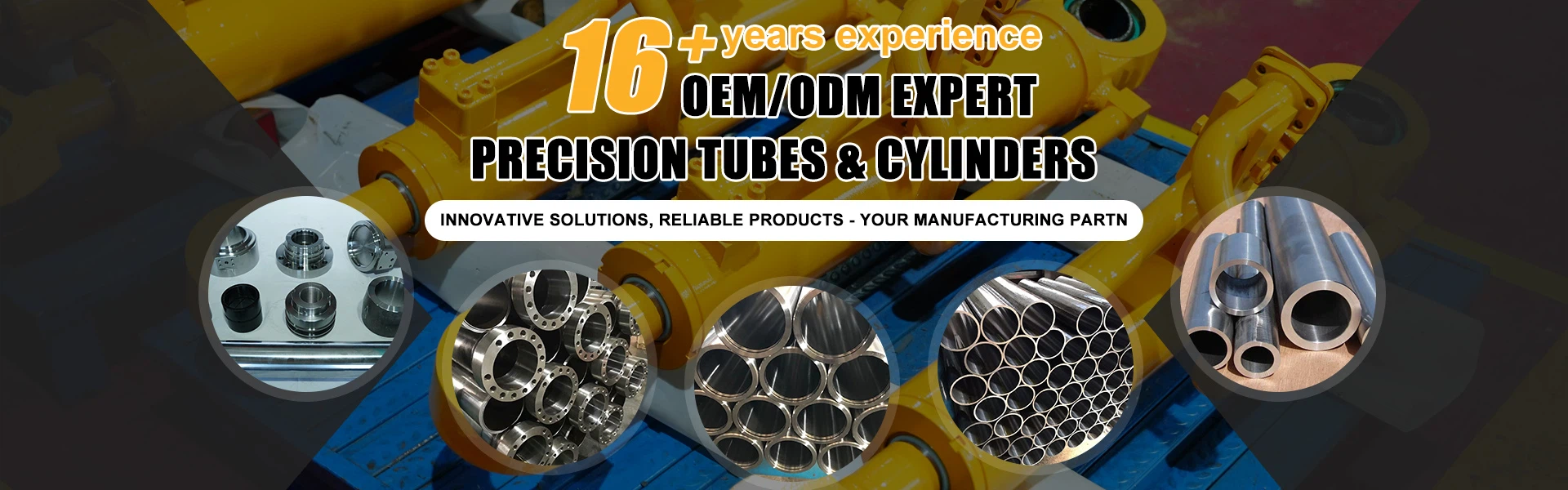


The piston rod cylinder is a key actuator in hydraulic and pneumatic systems, primarily used to convert fluid pressure into mechanical energy, achieving linear reciprocating or rotary motion. Its structure typically consists of a cylinder body, piston, piston rod, seals, and end caps, all of which work together to ensure system stability and reliability.
The cylinder body, serving as the external load-bearing structure for the piston rod, is typically constructed of high-strength alloy steel or aluminum alloy to withstand the impact and friction of high-pressure fluids. Its interior is precision-machined to ensure a uniform clearance with the piston, thereby reducing leakage and improving transmission efficiency. The piston rod, a key component connecting the piston to the external load, is typically chrome-plated or nitrided for enhanced wear and corrosion resistance. Seals (such as O-rings and lip seals) prevent hydraulic oil or gas leaks and ensure stable system pressure.
The piston rod cylinder's primary function is to provide linear thrust or tension, and is widely used in engineering machinery, metallurgical equipment, automated production lines, and aerospace. For example, in excavators, cylinders drive the bucket up and down; in injection molding machines, they control the opening and closing of molds; and in automated equipment, cylinders enable precise positioning. Based on their structural differences, piston rod cylinders can be categorized as single-acting (with unidirectional output), double-acting (with bidirectional output), and telescopic (with multi-stage telescopic capabilities to accommodate long strokes).
With the advancement of industrial technology, modern piston rod cylinders are being optimized for high precision, low friction, and long life. For example, composite seals are being used to reduce wear, or finite element analysis is being used to optimize cylinder structure to increase load capacity. In the future, with the advancement of intelligent manufacturing, piston rod cylinders will further integrate sensors to enable condition monitoring and fault warning, thereby enhancing the overall intelligence of the system.
In short, as the core actuator of a fluid power system, the performance of the piston rod cylinder directly impacts the operating efficiency and reliability of the equipment, playing an irreplaceable role in modern industry.


