
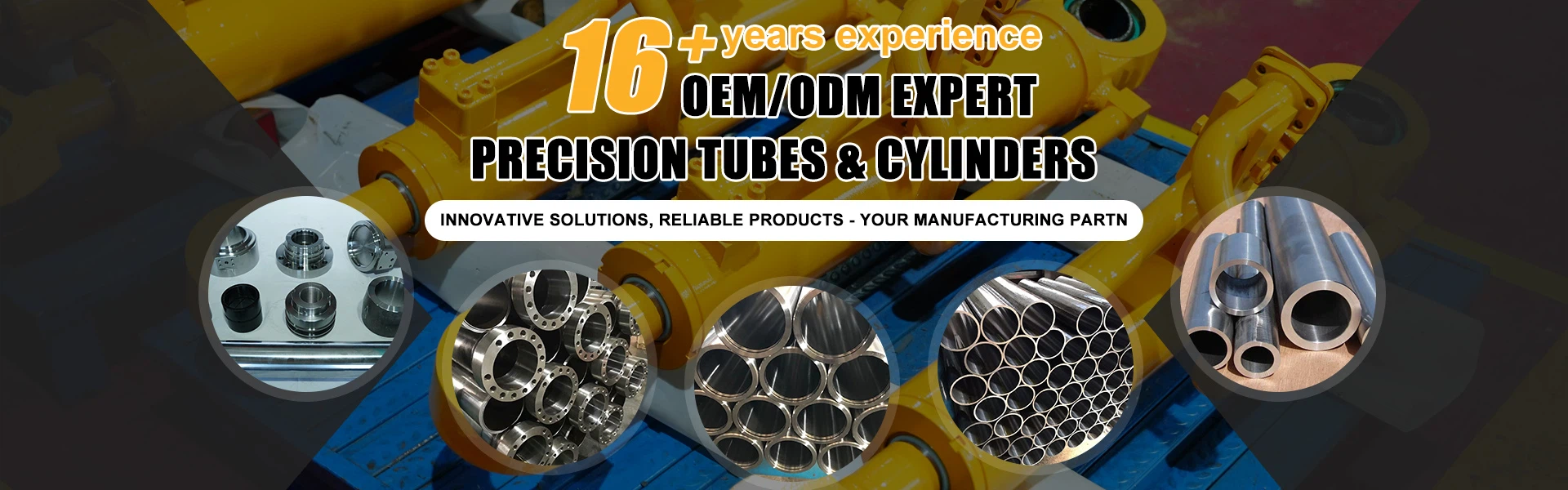


Cold-drawn tubes are steel tubes manufactured using a cold-drawing process. This production process does not rely on high-temperature heating, but rather plastically deforms the metal tube at room temperature. This process significantly improves the dimensional accuracy, surface finish, and mechanical properties of the steel tube, and is widely used in machinery manufacturing, the automotive industry, and hydraulic systems.
The core principle of cold-drawn tubes is to use external forces to plastically deform the metal tube in a die. During processing, one end of the metal tube blank is forcibly pulled through the die orifice. The tensile force overcomes the metal's resistance to deformation, reducing its cross-section and increasing its length. During this process, intense friction between the tube and the inner wall of the die forces the metal grains to realign along the direction of stretching, resulting in a denser microstructure. Because the entire process takes place at room temperature, the metal's hardness and strength increase due to work hardening, while its ductility decreases accordingly.
The key to the cold-drawing process lies in die design and tension control. The die is typically made of a high-hardness material, and the shape of its inner hole determines the dimensional accuracy of the finished tube. The drawing force must be precisely calculated to ensure sufficient plastic deformation of the metal while avoiding cracking due to excessive force. To reduce frictional losses, lubricants are often used during the process, and multiple progressive drawing passes may be employed to gradually achieve the target dimensions.
Compared to hot-rolled tubes, cold-drawn tubes offer higher dimensional accuracy and a smoother surface, but their production efficiency is lower and their cost is higher. The cold drawing process optimizes the residual stress distribution within the metal material, resulting in the final product exhibiting excellent compressive, wear, and fatigue resistance. This process is particularly suitable for applications requiring stringent tube precision and mechanical properties, and is an indispensable technical tool in modern metalworking.


